Every new year comes with fresh fishing hopes. This year, it seems the calendar couldn’t flip to ’26 fast enough, and now that we’re into the year it is time to start planning for a busy fishing future. Here is your list of 20 species that make a trip to the western Bahamas well worth the time and cost.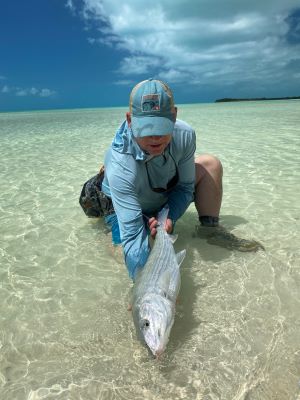
Moving chronologically through the year, now is the time to get over there and target wahoo. The
number of wahoo that can be encountered in Bahamian waters can be staggering, and they are
relatively easy to target using the same techniques as our home Florida waters. If inshore fishing is your
game, bonefish are abundant. During these early months of the year, you might encounter slightly fewer
numbers but this is when you are more likely to encounter bigger bones.
As the calendar eases into spring, the wahoo bite gives way to other pelagic predators, and yellowfin
tuna are at the top of the list. Like wahoo, you can target them just west of the closer check-in ports
such as West End, Bimini, or Cat Cay, meaning you can check in, fish, and return home to Florida all in
the same day, only leaving the boat to complete paperwork upon arrival. Many opt to ‘run and gun’
chasing feeding birds, and you’ll encounter mahi mahi along the way. Just to keep things interesting, this
is primetime for sailfish. If you are chasing bones on the flats in the spring, let your guide know you are
interested in a shot at permit, which gets us to six species and we are barely into the spring.
Deep dropping can productive year-round, but spring is a good time to target some of the deeper,
tastier snappers. The bite will be hot, and we’re getting into the time of year when it can be a little
easier to find calm seas. Drop small chunk baits down to 400 feet, give or take, and you might bring your
line back to the boat with blackfin, queen, black or silky snappers. From 150’ to 400; or so, dropping a
butterfly jig, or grouper jig tipped with a small chunk or live bait can produce hefty mutton snappers and
red groupers, and some beastly black groupers. That’s 13 species and counting…
May and June bring you the best chance you’ll have at seeing a giant bluefin tuna. The population is still
thin but rebounding [link to our menhaden/bluefin story here]. Just seeing one charge up into the
shallow reefs that abut the eastern edge of the Gulf Stream is a thrill, and it so happens that you are in
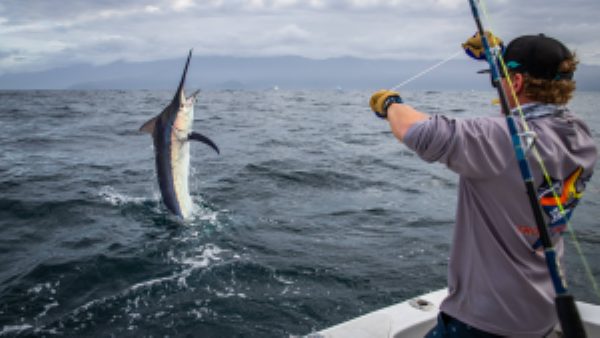
the right time and place to get into blue and white marlin, so bring your stout tackle. You will need it.
Summer fishing is a whole different ball of yarn, as anglers start to focus their attention on the
diminutive but tasty yellowtail snappers. This is the time of year to anchor up and chum, remember to
float a live bait on a bigger rod farther back in the slick because you may well draw the attention of cero
mackerel or other sharp toothed predators. Ease out into the deeper waters and you have a great
chance of filling your cooler with a limit of blackfin tuna. They are likely to be a good bit bigger than
what we usually catch off Florida’s east coast with fish hitting the 15-20 pound mark. It’s peak swordfish
season now, and if you are still targeting bonefish on the flats bring gear that is appropriate to sight cast
to tarpon. Most of these summer species will be around well into the fall. By then, it is time to start
thinking about wahoo again.
We have already hit our 20 species for the year, but there are a few bonus fish that you can target
through the entire calendar. Strawberry grouper, aka red hind, are always around in depths of 150-400’.
African Pompano might not be the first fish you think of when you dream of the Bahamas, but they are
another fish which can show up throughout the year, usually in mid-depth waters near some structure.
And of course, like it or not you will catch plenty of barracudas and sharks. Don’t let 2026 slip by without
giving the Bahamas more than just a thought. After 2025, we all deserve some a dream trip. Or 20
dream fish.