
Bluefin Tuna: Can the legendary South Florida/Bahamas Fishery Ever Return to Glory?
(Probably! But not without help from a very small yet significant fish. Guess which one…)
During a late spring weekend in 1939, the first Cat Cay Bluefin Tuna Tournament was held at Cat Cay, Bahamas, a mere 50 miles east of Miami and 60 miles from Ft. Lauderdale.
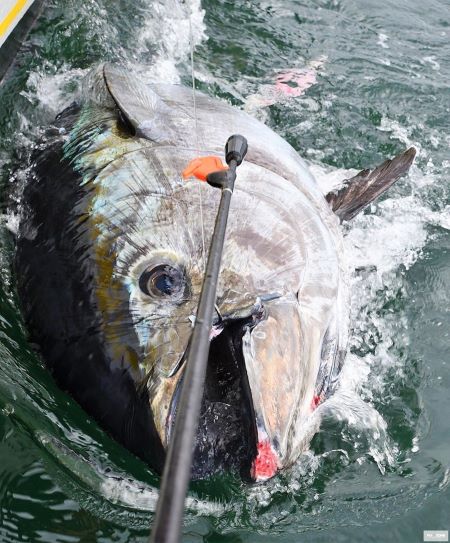
A new world of fishing was born that weekend. ‘Sportfishing’ became a thing, and the now ubiquitous ‘tuna tower’ that adorns so many offshore boats was developed for better bluefin tuna fishing.
Back then, the lead story of the local newspaper in Palm Beach County often centered around new fishing gear. Imagine that today – an entire first page of the paper dedicated to the newest model of Penn trolling reels.
I don’t expect any “New Products from ICAST!” headlines to take over the front page, but I do think we could see a resurgence of the fishery that started it all.
Why did the bluefin tuna population crash? As often happens, the global demand for bluefin tuna created a commercial fishery that outgrew the population. Schools of the behemoths used to be large and numerous, with late spring congregations along “Tuna Alley,” a roughly 20-mile strip of sand that runs from Bimini south to Cat Cay.
In 2014, there was optimism that the bluefin populations were increasing enough to bring back the Cat Cay tournament, which had been shuttered for decades. The population rebound was due to improved management and protections of bluefin tunas, and optimism was buoyed by a promise of improved management of their primary forage, menhaden.
The high concentration of fats and oils in menhaden makes it an important prey species for bluefins, as well as many other predator species. In fact, during the winters off the Carolinas, menhaden can make up 95% of the bluefin tuna’s diet. Further north in the Gulf of Maine, menhaden are playing an increasing role in the dietary structure of bluefins. Historically herring were the main prey here, but their decline – combined with a northward shift of menhaden as waters warm in the Atlantic – have pushed menhaden to the front of the feed line here too. This change will increase pressure on the menhaden stocks.
The primary source of menhaden depletion comes from the commercial reduction fishery, which is controlled in the Atlantic by a single company. (Note the TRCP link at the end of this article to learn more about the menhaden reduction fishery today.)
Bluefin tunas are just one of the many species that depend on menhaden for their survival. Striped bass rightfully receive most of that ink these days, as they are in the midst of a sharp decline. Humpback whales, seals, ospreys, and scores of other species rely on them too. For this reason, menhaden became the first species to have Ecological Reference Points (ERPs) considered in management decisions, instead of simply looking at the single species and determining how many can be harvested before there was a total collapse of said species.
In other words, fewer menhaden in the water means an overall decrease of many other species, and this critical point is sort of considered when management allocations are set by the ASMFC (Atlantic States Marine Fisheries Commission).
I say ‘sort of’ because last month, the ASFMC voted to allow a harvest of menhaden that is sharply above what the ERP’s suggest is a sensible and safe harvest limit. This is a slap in the face to those who fight for conservation and sound fishery management and could well end up being a crushing blow to not only menhaden, but the many species that depend upon them.
Back to bluefin tunas.
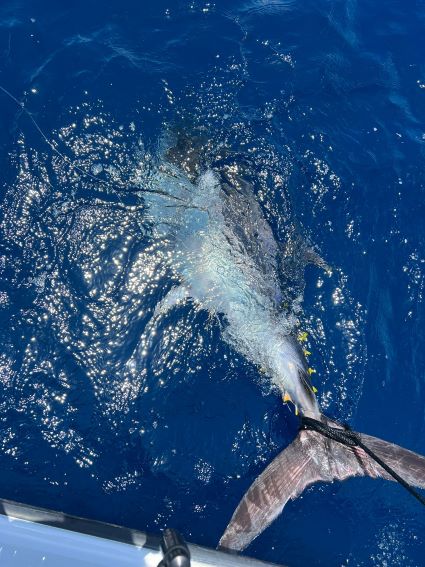
Bluefin are highly managed, and according to Robert “Fly” Navarro, we spend more money on managing bluefin tunas than any other of the large pelagic fish roaming our waters.
“So many countries want a piece of the bluefin tuna allocation,” says Navarro. He’s right - with the boom of high-end sushi entering the global market, bluefin tuna might as well be schools of swimming gold bricks.
Navarro is a force in the world of big-game tournament fishing (check out his website, flyzone.ai and follow him on social media [search “Fly Navarro”] to keep your fishing heart happy on those non-fishing days), and he is no stranger to bluefin tunas. “Starting in May or so, one or two sailfish guys will get spooled by a giant bluefin. They run south, round the Keys into the Gulf to spawn, then come right back through after,” he said.
“I would love to see them become plentiful enough to host tournaments again. Costa tried back in 2014, but there just weren’t enough fish to support the event.” That June, 6 boats spotted about 60 bluefin during the event but nobody landed one. “There’s about a six-week window, and right now conditions have to be absolutely perfect to get a shot at one.”
Back in the day, there were many schools of 60 or more fish, and anglers had multiple shots each day.
The number of tunas farther up the coast is increasing, Navarro said, which is a promising sign. “I fish up there (in Canada) six weeks each year, and I am booked every day. Recently we hooked a 900 pounder in 32 feet of water and released it in 19 feet!”
That sounds like what Cat Cay used to be like, except anglers can wear board shorts and bikinis instead of cold-water gear.
There is no question that a revived tropical bluefin tuna fishery would pump energy and money into Florida’s sportfish community. The path to that future involves continued shrewd management of the tunas, as well as a better understanding of the important role menhaden plays in the overall health of our ecosystem.
The big takeaway here is, menhaden are important to Florida. Successful management of menhaden would mean increased populations up and down the Atlantic coast, including Florida. Our nearshore fisheries would most certainly benefit from a return to our glory days of menhaden populations, that is an obvious point. But more menhaden in the waters north of us impact migratory species that pass through our waters, such as whales, billfish, and mighty bluefin tunas.
Thanks for reading! Below are a handful of online resources to back up some of the statements made here. They are just good reads too, so click ‘em up.
Ties between Menhaden and Bluefin:
-
- TRCP’s Fact or Fiction piece points out that the menhaden reduction industry in the United States, which consists of two foreign companies, is still trying to spin public perceptions towards feeling sorry for them, even though they managed to side-step sensible and needed management suggestions which would help safeguard not only menhaden, but the many species of animals which depend on them to maintain healthy populations of their own.
- Oceana – “classic predator-prey relationship” citing a 90% diet reliance of menhaden throughout certain portions of their lifecycle. Further, with the decline of herring, scientists are noting bluefin in the Gulf of Maine feeding on a higher percentage of menhaden than previously in that region, increasing the overall dependence on menhaden. Not for nothing, Oceana points out that menhaden feed on microscopic algae, helping to keep it from growing out of control, particularly in nutrient-polluted waters near the coast.
- University of Maine article speaks to the shift of bluefin diet in the Gulf of Maine from Herring to Menhaden, noting the increased pressure this will put on menhaden.
- A link to Virginia Tech libraries points out that due to menhaden’s highly variable spawning productivity and unknown/uncertain responses to climate changes, current management thresholds could cause the entire population to completely crash out.
- Very cool 2020 Long Island Youtube video of bluefin tuna feeding on menhaden 1/2mile from shore. https://www.youtube.com/watch?v=e-0JAodI2A0
- just a badass oldey-timey FB video provided by IGFA of bluefin fishing in the Bahamas. https://www.facebook.com/reel/10154461924323112